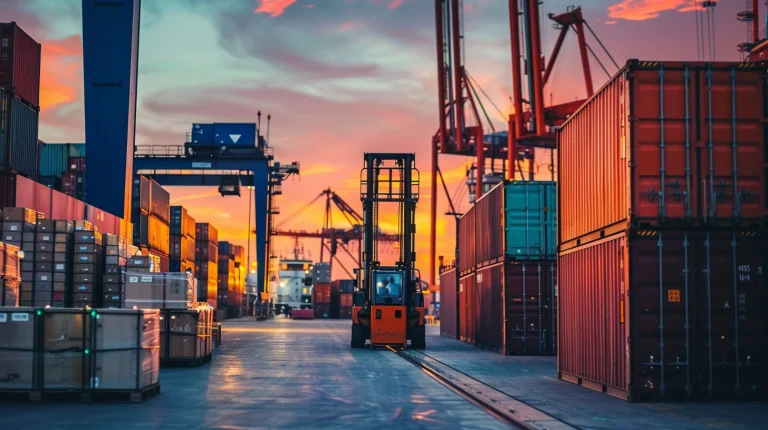
Pallets form the foundation of today’s supply chains. Whether in warehouses, cold storage, or cross-border shipments, they support the global flow of goods.
And while pallets may appear simple in design, their material and engineering have evolved drastically over the decades. The global plastic pallets market reached USD8.8 billion in 2025 and is projected to grow to USD15.4 billion by 2035, expanding at a compound annual growth rate (CAGR) of 5.8%¹. This growth is largely driven by industries demanding hygiene, consistency, and automation in their logistics platforms.
Here, we take a look at how pallets developed from basic wooden platforms into advanced plastic solutions.
The evolution from wood to plastic
Wooden pallets gained popularity sometime between the 1920s and 1930s, driven by the rise of forklifts and industrial-scale logistics². They were cheap, strong, and easy to manufacture. During and after World War II, their use exploded across storage and shipping operations.
Over time, however, the shortcomings of wood became more obvious. Wooden pallets absorb moisture, which can lead to mold and rot. They can splinter, carry pests, and vary in quality and dimension. Such inconsistencies pose risks for hygienic operations and automated systems alike.
As the global economy grew more interconnected, companies began to demand packaging and transport platforms that met stricter hygiene standards and tighter tolerances. By the late 20th century (circa 1970s), plastic pallets emerged as a solution³.
Currently, plastic pallets account for approximately 32% of the global pallet market, with adoption increasing especially in pharmaceutical and food sectors.
They offer uniform shape, resistance to moisture, and greater durability. In addition, wooden pallets used internationally had to conform to increasingly strict phytosanitary rules; by contrast, high-quality plastic pallets bypassed many of these trade-related limitations.
Growing environmental considerations began to influence the shift as well.
The high global demand for timber raised concerns about deforestation and the overall carbon footprint of producing wooden pallets in large volumes. As ESG requirements became more prominent, companies started seeking longer-lasting solutions that produced less waste.
Due to recycling, longer lifespans, and alignment with sustainability goals, even more companies started to see plastic pallets as the more sustainable option.
So, what makes plastic pallets so valuable in modern supply chains?
Several major forces have driven the adoption of plastic pallets across industries:
- Hygiene and cleanability
Plastic pallets are non-porous, so they do not absorb liquids or chemicals. Their smooth surfaces simplify sanitation and minimize the risk of contamination — a critical factor for hygienic plastic pallets in food, beverage, and pharmaceutical settings. - Uniformity for automation
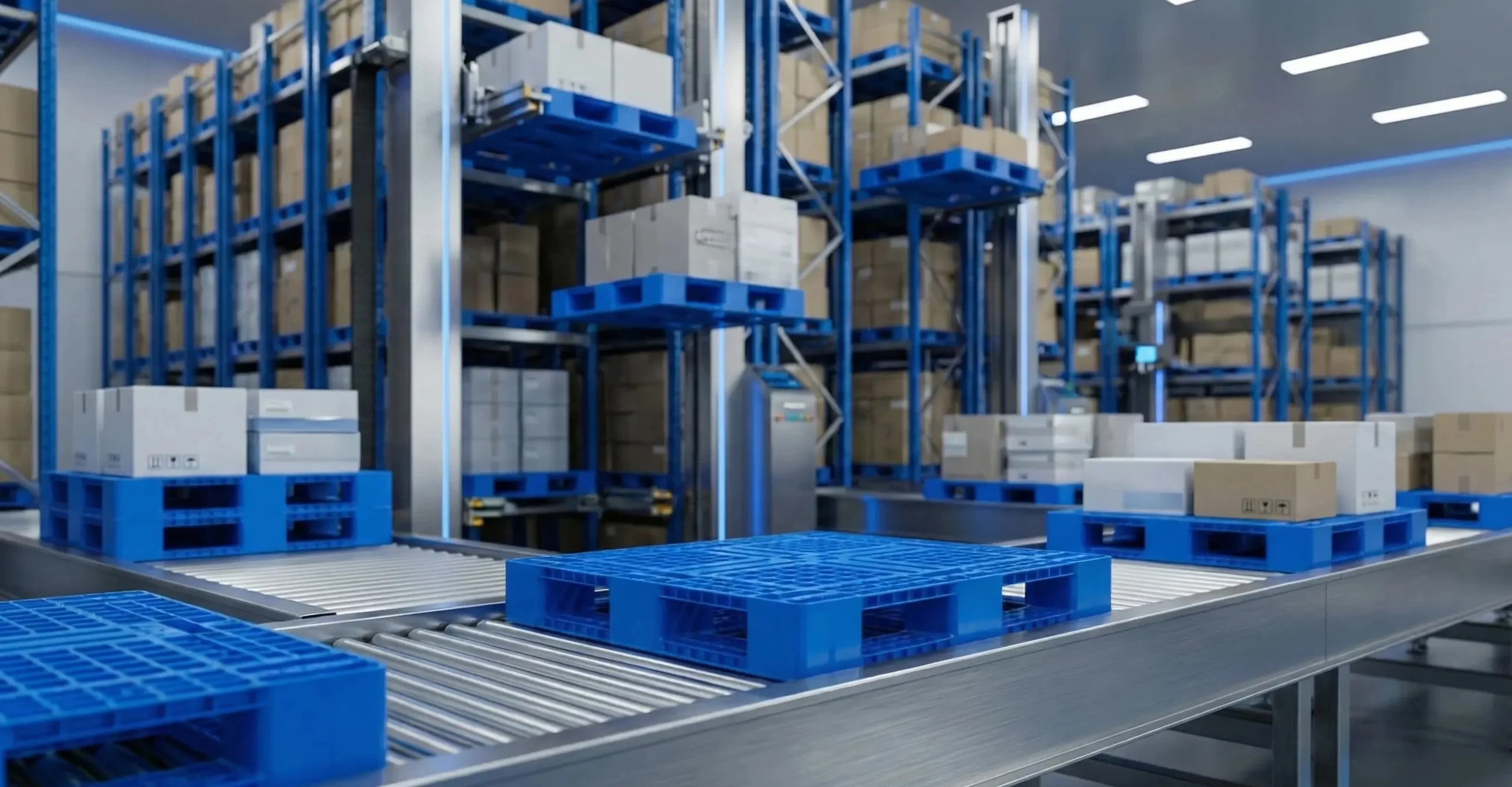
In automated warehouses, systems such as ASRS (Automated Storage and Retrieval Systems) or conveyor lines demand exact pallet dimensions and stable performance. Plastic pallets are moulded to tight tolerances, reducing issues such as warping or misalignment. - Long-term durability
Compared to wood, plastic does not crack or break easily under repeated use. That durability translates into fewer replacements and a lower cost of ownership for a warehouse solution. - Safer handling
Without nails, splinters, or rough edges, plastic pallets reduce risk to workers. Their design supports safer forklift handling and manual movement. - Optimised for shipping
For cargo shipping, plastic pallets help eliminate many of the logistical challenges associated with wooden pallets — including fumigation, pest management, and inconsistent quality. Their strength, stability, and hygiene make them well-suited for global logistics.
Comparing plastic pallets with wooden pallets
| Plastic pallets | Wooden pallets | |
| Hygiene | Non-porous, easy to wash | Absorbs moisture, risk of mold or pests |
| Durability | Long-lasting, resistant to impact | Can splinter, break, or warp |
| Weight & Handling | Often lighter and more uniform | Heavier and variable |
| Automation Compatibility | Highly precise and consistent | Less reliable under automated systems |
| Environmental Impact | Recyclable; supports circular use | Biodegradable, but generates waste through constant repair |
| International Shipping Requirements | Exempted from ISPM-15 | ISPM-15 (fumigation or heat treatment is required) |
| Cost | Moderate but with longer service life | Relatively lower but with shorter life spans |
| Capacity | High due to advance moulding machine technology | Low and limited due to raw material availability, complex manufacturing processes and stringent storage requirements |
In many industrial settings, especially those demanding hygiene and efficiency, plastic pallets provide clear advantages.
So, what to look out for when choosing plastic pallets?
Choosing the right plastic pallet is not simply a matter of choosing plastic over wood. Several factors matter:
- Intended use: Determine whether the pallet is for internal warehousing, production, or external shipping or cold room.
- Load capacity: Assess static, dynamic, and racking load needs
- Cleaning requirements: Select based on hygiene standards (for example, pharma or food)
- Automation needs: Make sure the pallet supports systems such as ASRS or conveyor lines
- Deck design: Decide on single deck, double deck, nestable or reversible pallets
- Material characteristics: Choose between materials like HDPE (for flexibility) or PP (for rigidity)
A carefully selected pallet helps improve safety, efficiency, and product protection throughout the supply chain.
IntracoPallet’s pallet lines for your material handling needs
IntracoPallet offers a range of plastic pallets designed for specific industrial demands, from in-warehouse use to export shipping.
Warehouse
- A-series (ASRS): Reinforced to deliver ultra-high strength with less than 10 mm deflection under load. Designed for automated storage systems and drive-in racking.
- P-series (pharmaceutical): Flat, smooth surfaces on both top and under-deck for maximum cleanliness. Steel reinforcement supports stacking and racking in sterile environments.
- S-series (super hygiene): Flat top surface, steel-reinforced, HACCP- and GMP-compliant. Available in various configurations, including 9-leg and reversible designs.
- H-series (heavy-duty): Built for heavy loads, with high dynamic capacity and reversible or double-deck options. Excellent for both racking in the warehouse and transporting large or dense goods.
- M-series (medium-duty): Balanced weight with single or double deck, available in 4-way or 2-way entry. Ideal for stacking uniform goods.
Shipping
- X-series (cargo): Lightweight, nestable, and optimised for one-way shipping. Available in reversible and double-deck designs, with strong dynamic load capacity suited for global transport.
Plastic pallets are the future, and IntracoPallet is leading the way
More than just niche tools, plastic pallets have become a central component of modern warehouse solution architectures and global logistics networks.
Their strength, hygiene, and compatibility with automation systems make them a superior choice for companies that want reliable, long-lasting, and safe material handling. They also enable smoother and cleaner cargo shipping, particularly when exporting goods across international markets.
Since starting up in 1994, IntracoPallet has grown into a leader in this segment. Our product lines address real-world challenges, from hygiene-critical industries to heavy-duty storage and global shipping.
By choosing the right pallet, you build a more efficient, scalable, and future-ready supply chain.Get in touch with us today to start transforming your operations with pallets that satisfy all of your material handling needs.